
This homemade yogurt recipe is a true kitchen staple! It’s perfectly creamy, super delicious, and easy to make with this foolproof method.
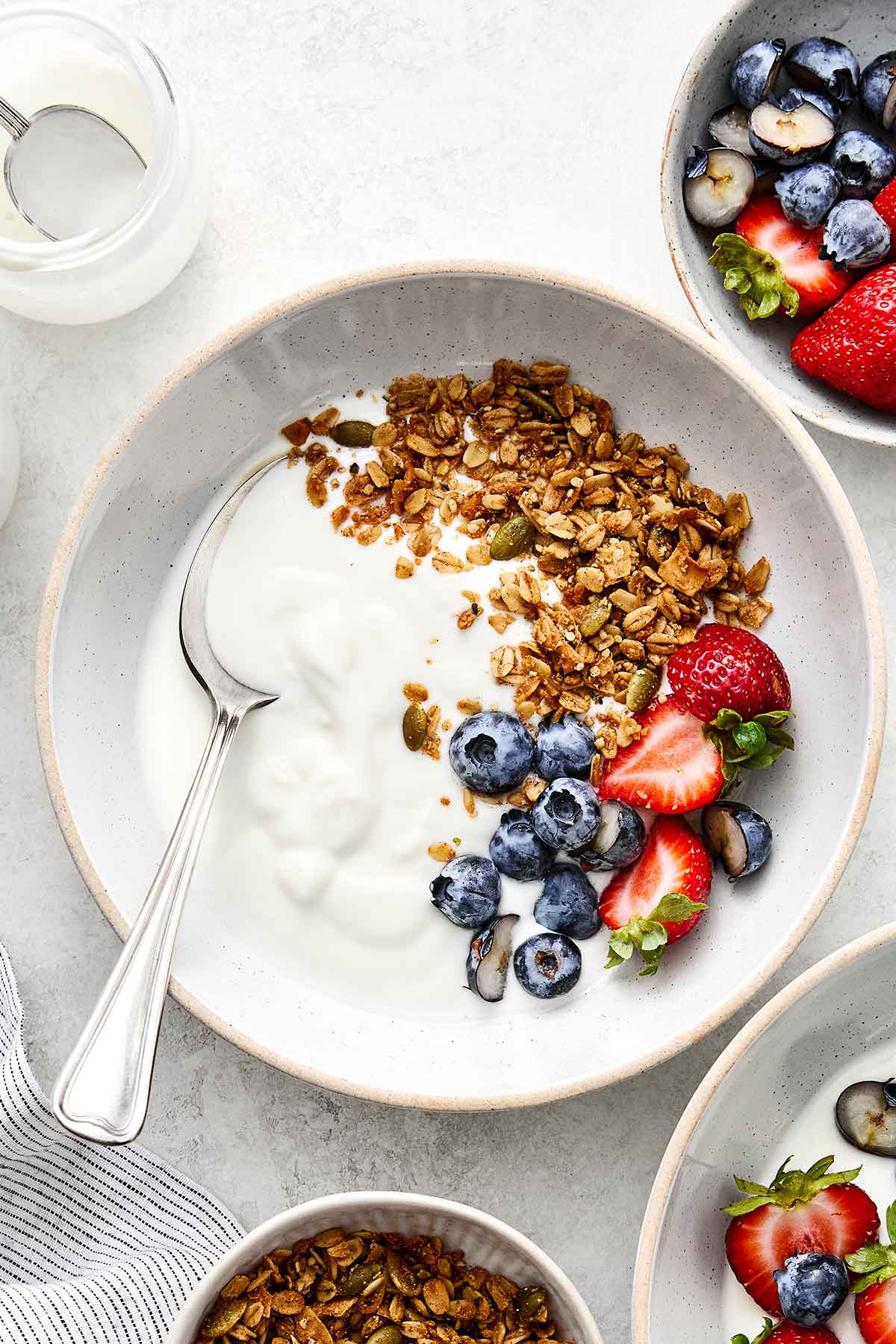
Why You’ll Love This Homemade Yogurt
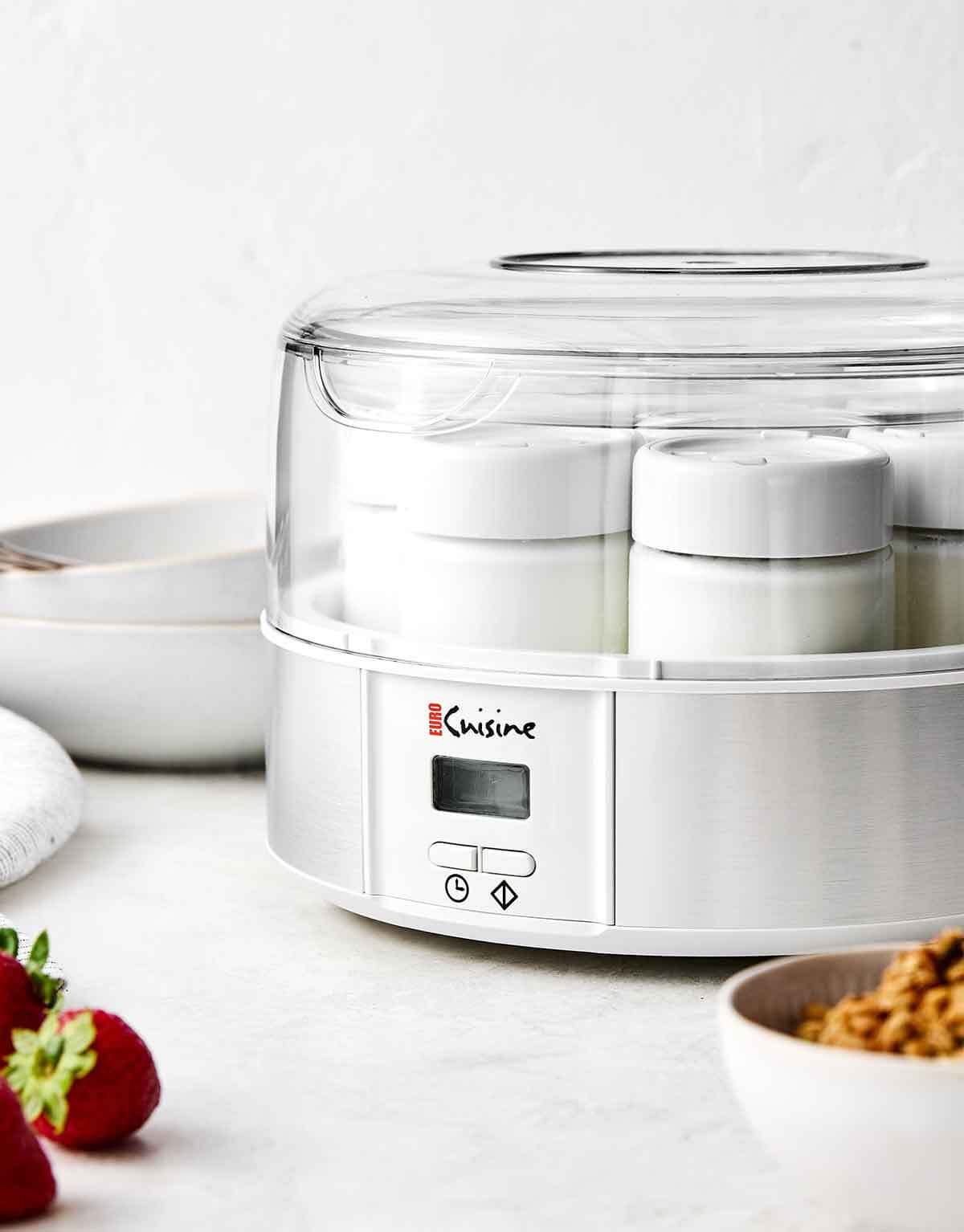
Making my own yogurt at home has been a total game-changer. I love a simple yogurt bowl with fresh berries. But it’s also a super delicious high-protein breakfast when combined with Turkish eggs or dolloped on my lemon ricotta protein pancakes. And while you can make yogurt using the stovetop and oven method, I strongly prefer using my Euro Cuisine yogurt maker. After making well over 100 batches of yogurt at home, I can confidently say I’ve never had a batch fail. Not one! When I first tried the stovetop method, I either boiled the milk over (huge mess) or scorched it to the bottom of the pot (which is not fun to clean). And I’d also prefer not to tie up my oven for eight hours while the yogurt incubates (as I frequently multi-task in the kitchen). So if you’re like me, here’s why you’ll love this approach too:
- Perfectly portioned. The yogurt maker portions the yogurt into individual serving jars, and the lids even have a date stamp, so you’ll always know when you made the batch.
- Great for meal prep. Homemade yogurt keeps well in the fridge for up to 10 days, which makes it perfect for easy breakfasts or snacks.
- Healthier than store-bought. There’s no preservatives, additives, or mystery ingredients. It’s just real, simple yogurt!
Homemade Yogurt Ingredients
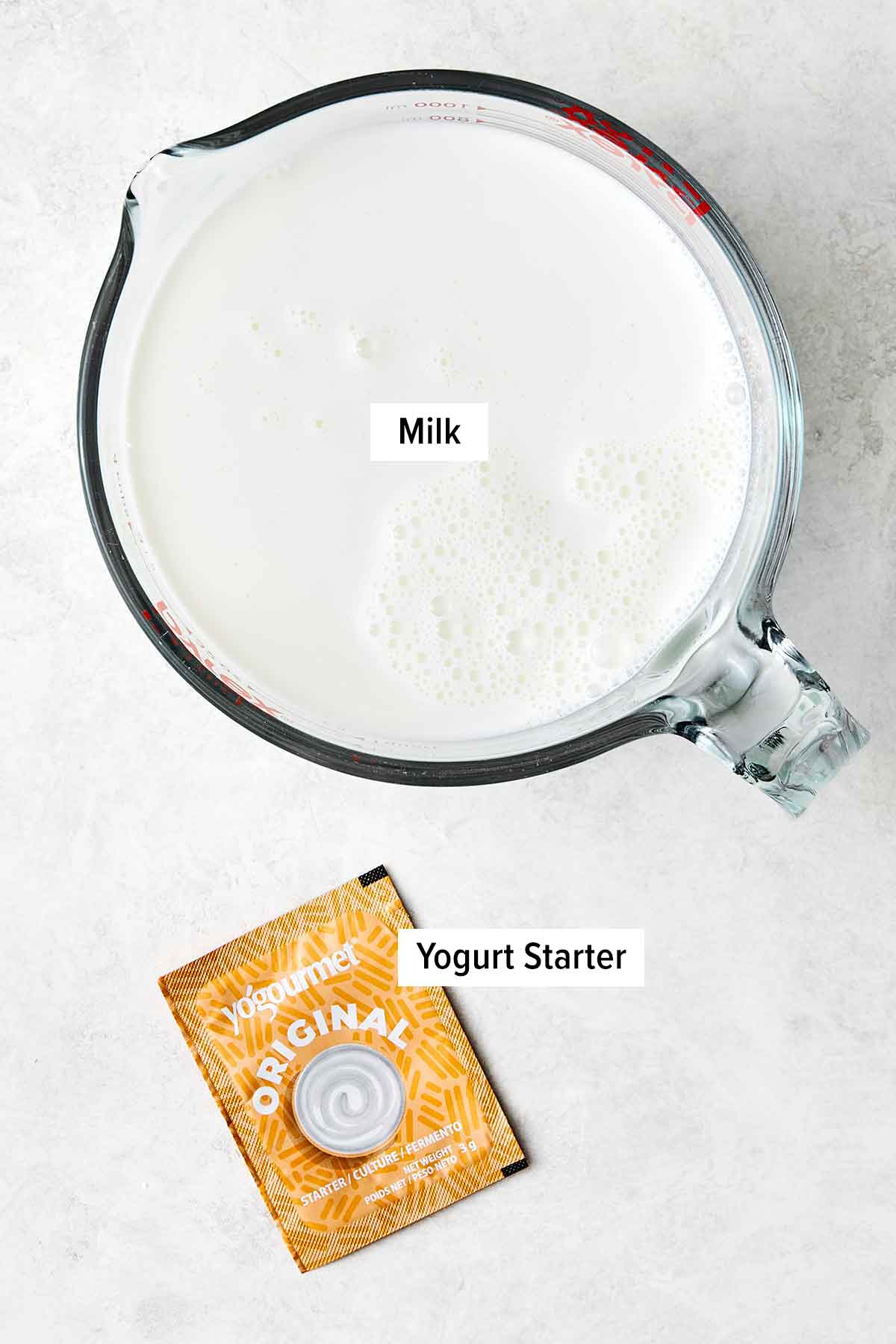
It should go without saying that starting with the best quality ingredients ensures you’ll have the best quality end product. That means I always start with organic, grass-fed milk and use either a yogurt starter or a few tablespoons from one of my own previous batches.
- Milk: Whole milk will give you the creamiest yogurt, but you can use 2% milk, skim milk, or goat’s milk. The more fat in your milk, the thicker the end product will be. In the video below, I used 2% milk, which is why it wasn’t super thick. In my red fruit salad with honeyed yogurt recipe, I used whole milk, and you can see it’s much thicker.
- Yogurt Starter: You can use a powdered yogurt starter (I use Yogourmet) or about 3 tablespoons of plain yogurt from a previous batch or a high-quality store-bought yogurt with live cultures. You can definitely use supermarket-brand yogurt as a starter, but please read the ingredients carefully and look for live, active cultures.
How to Make Homemade Yogurt
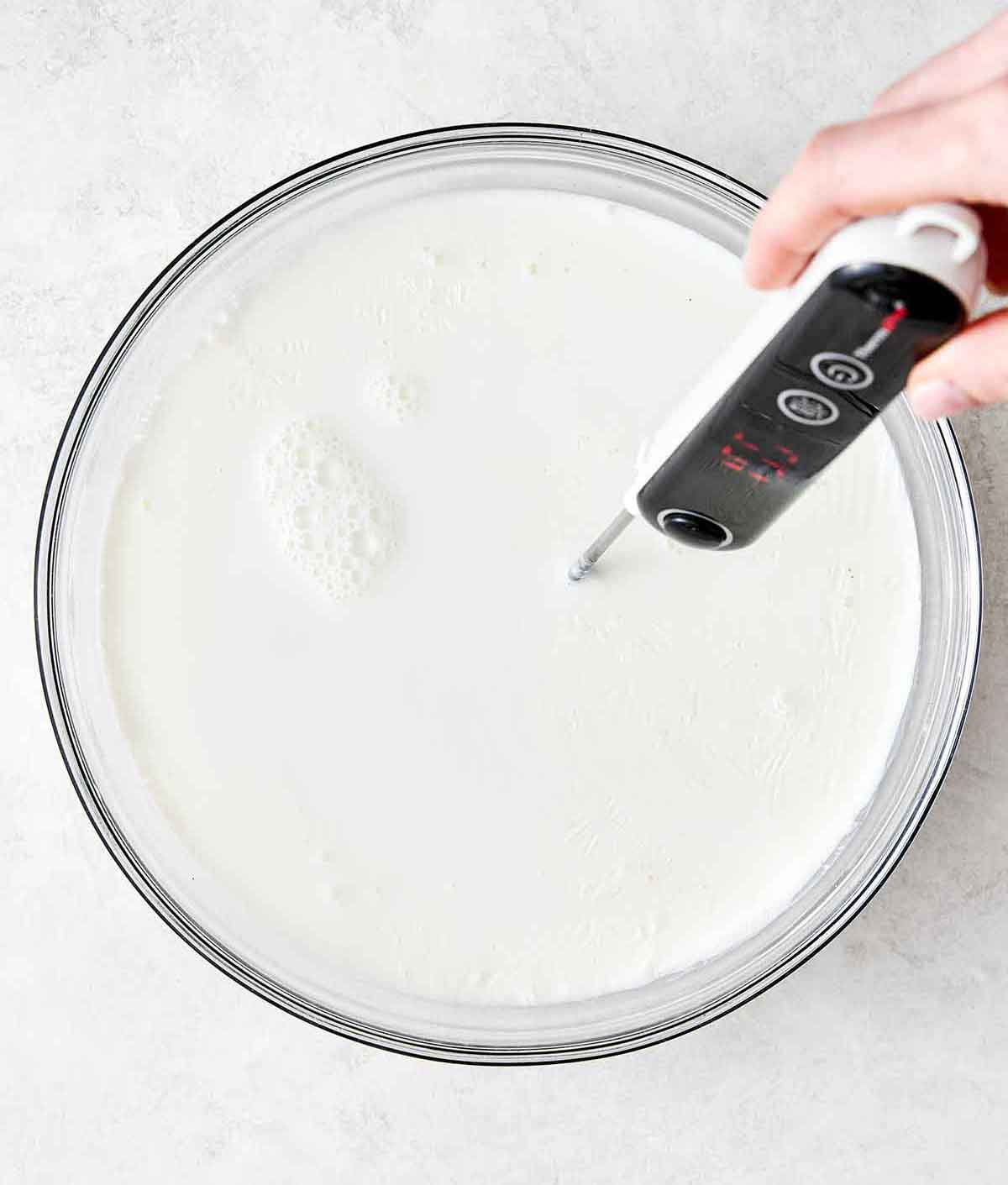
Step one: Heat the milk to 180°F. This step is important. Heating the milk kills any unwanted bacteria and creates the right environment for the good bacteria to thrive. It also helps create a thicker yogurt by changing the protein structure of the milk.
Step two: Cool the milk to 112 to 115°F. Once the milk is heated, let it cool down to this sweet spot. It’s warm enough for the good bacteria to grow, but not so hot that it kills them. An instant-read thermometer is your best friend here.
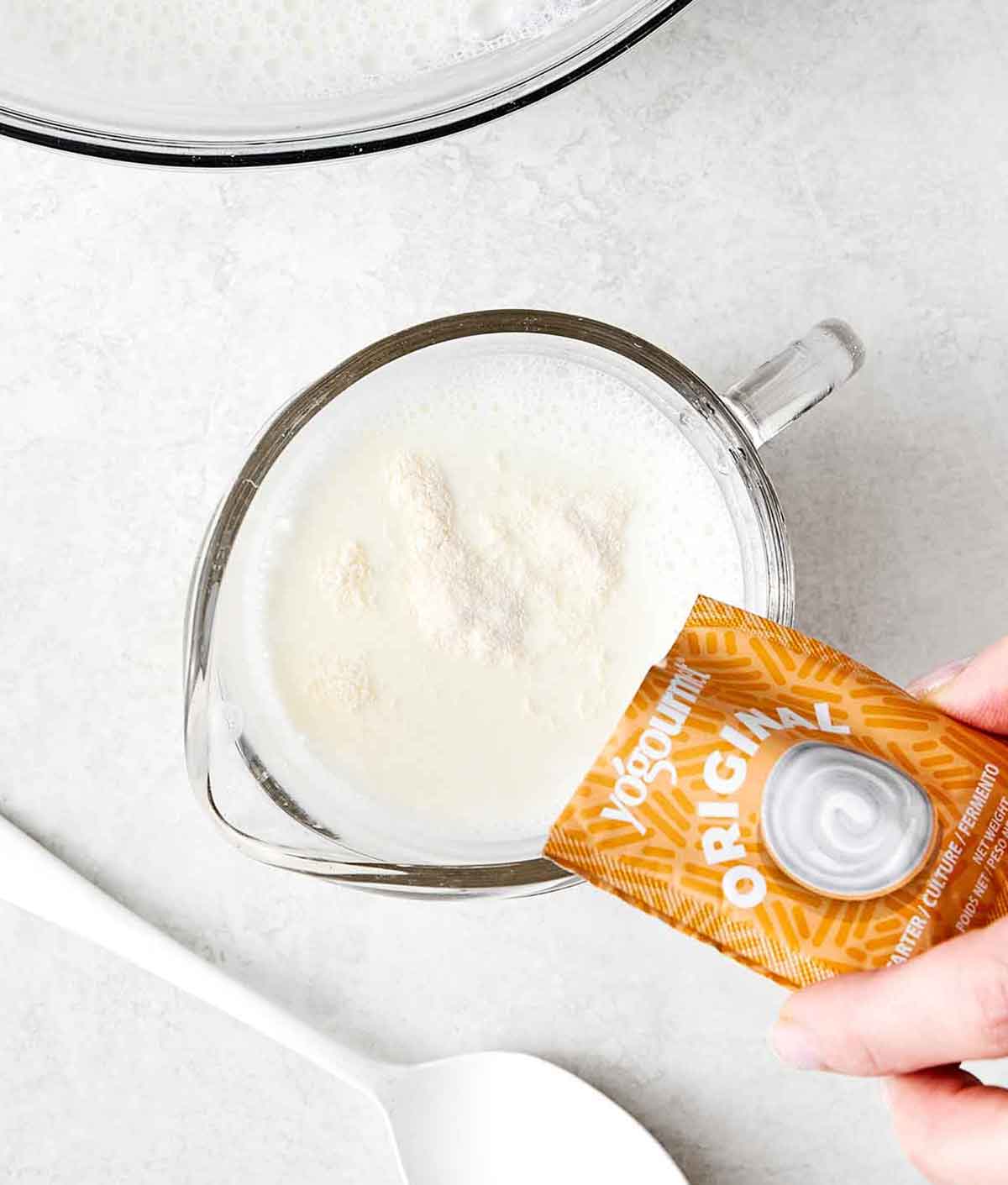
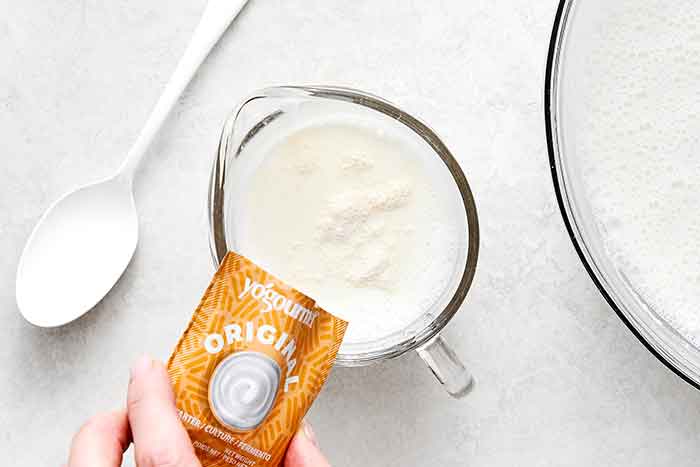
Step three: Add the yogurt starter. Pour about one cup of the warm milk into a bowl and whisk in your yogurt starter or 3 tablespoons of prepared yogurt. For a good starter, you’ll want cultures like Lactobacillus bulgaricus and Streptococcus thermophilus. Additional cultures like Lactobacillus acidophilus and Bifidobacterium lactis are a bonus.
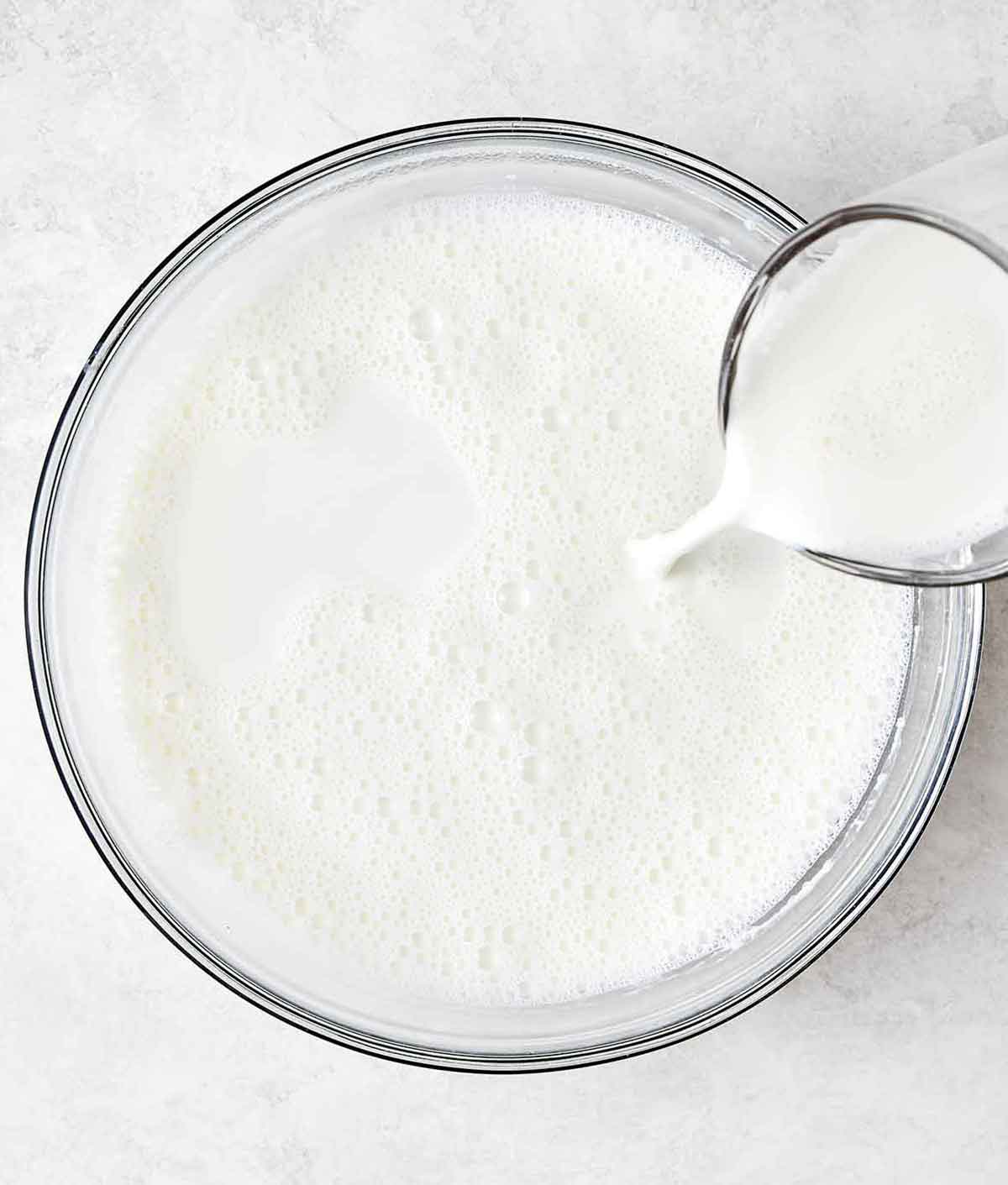
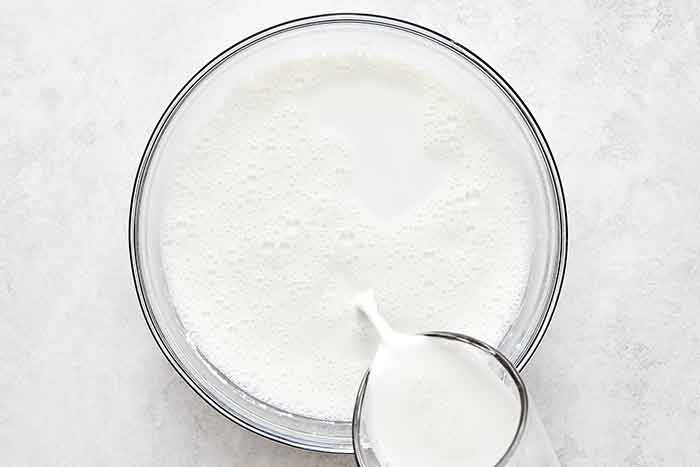
Step four: Combine everything. Pour the starter mixture back into the rest of the milk and stir well. This evenly distributes the good bacteria throughout the milk.
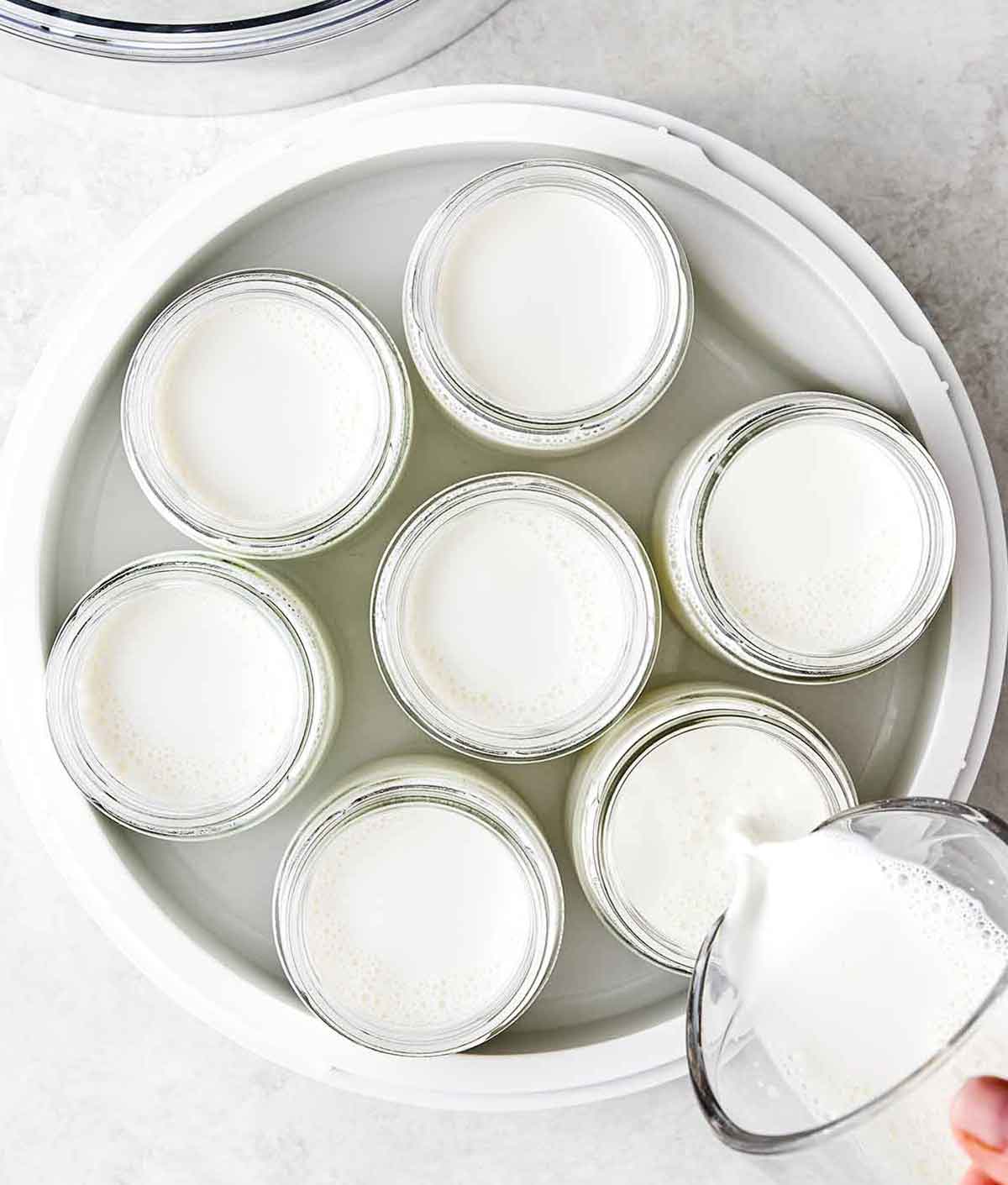
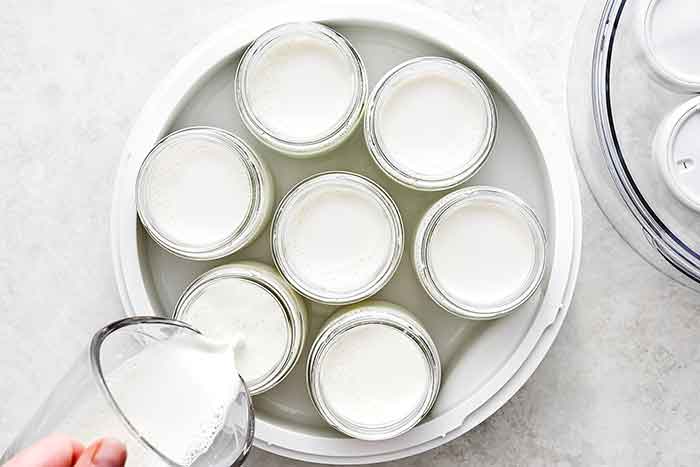
Step five: Incubate the yogurt. Pour the milk into the yogurt jars and place them in the yogurt maker. Let them incubate for 7 to 9 hours. The longer the yogurt incubates, the thicker and tangier it will become. Around 8 hours is usually my sweet spot for thick, creamy yogurt.
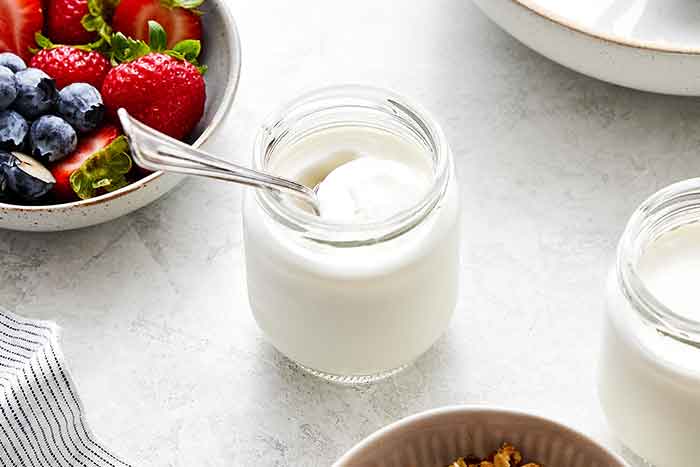
Step six: Chill and set. Transfer the jars to the refrigerator and let them chill for a couple of hours. The yogurt will continue to thicken as it cools, and then it’s ready to enjoy plain or with your favorite fruit and granola toppings!
Homemade Yogurt Tips
- The first time you make yogurt, it will likely taste a bit tangy, no matter how long you incubate it. That’s completely normal! Most of us are used to store-bought yogurts that are heavily sweetened, so your taste buds just need a little time to adjust. And trust me, they will (and pretty quickly).
- If you’d like to sweeten your yogurt, you can stir in 1 to 2 tablespoons of maple syrup during step #4 above. You can also add vanilla extract or the seeds from a scraped vanilla bean. Honestly, the vanilla alone makes the yogurt taste naturally sweeter without adding much at all.
- If you want to add fruit, wait until after the yogurt has finished incubating. Adding it earlier can interfere with the bacteria doing their thing, and we definitely don’t want to slow down the process of creating thick, creamy yogurt.
- Looking to make dairy-free yogurt? The process for coconut milk yogurt is very similar, with just a few nuanced differences. The good news? I’ve already got a recipe for coconut yogurt with blood oranges and cacao nibs (so good). Follow those instructions, and you’ll be all set!
Storage Tips
Homemade yogurt will keep well in the refrigerator for up to 10 days. Though I’ll be honest, once your family and friends find out you’re making yogurt from scratch, it probably won’t last that long!
More Delicious Recipes that Use Yogurt
- Strawberry Frozen Yogurt: Best homemade version.
- Red Fruit Salad with Honeyed Yogurt: Perfect for summer.
- Peach Breakfast Smoothie: A breakfast staple.
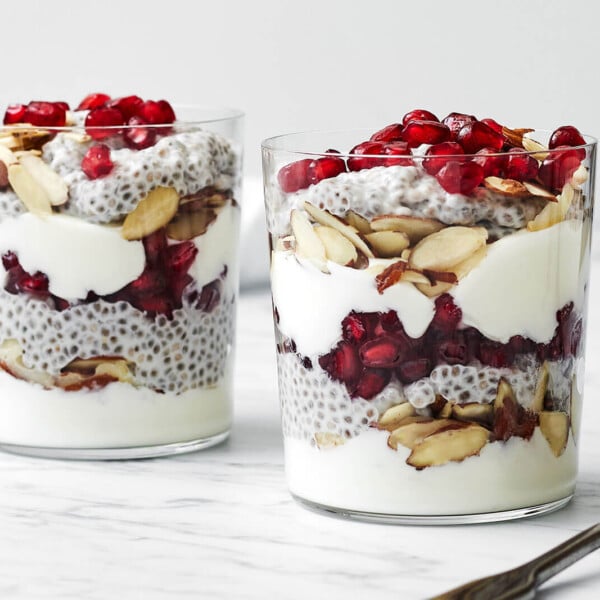
- Chia Pudding Parfait: You can customize the flavor.
- Smoked Salmon Frittata: The best brunch idea.
- Broccoli Salad: The yogurt-based dressing is so good!
If you try this homemade yogurt recipe, let me know how it turns out in the comments below! Your review will help other readers in the community. And if you’re hungry for more healthy food inspiration and exclusive content, join my free newsletter here.


Description
Video
Equipment
- Yogurt Maker My favorite one so far!
Ingredients
- 42 ounces organic milk, (whole, 2% or skim milk)
- 1 packet yogurt starter
Instructions
- Heat the milk. Pour the milk into a large glass, microwave-safe bowl. Heat the milk in the microwave on high for 10 minutes. Using an instant read thermometer, check the temperature of the milk. Keep heating in 1 to 2 minute increments until the temperature has reached 180°F (82°C).
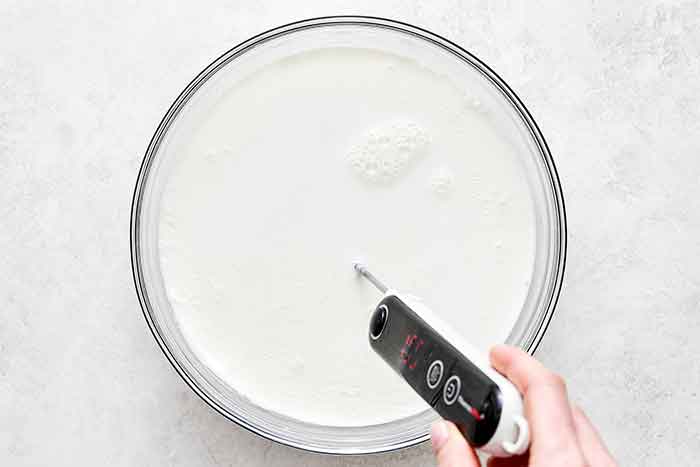
- Cool the milk. Remove the milk and let it cool to 112 to 115°F (44 to 46°C). This process can be sped up by using an ice water bath.
- Add yogurt starter. Pour 1 cup of the milk into a small glass. Sprinkle the packet of yogurt starter on top and thoroughly mix it in.
- Combine together. Pour the small glass of milk back into the large bowl and stir to combine.
- Incubate the yogurt. Fill the glass jars of the yogurt maker. Set the timer for 7 to 9 hours. The longer you leave the yogurt, the firmer and more tangy it will become. More beneficial bacteria are also produced with a longer incubation time.
- Refrigerate yogurt. Once the incubation is complete, remove the glass jars and refrigerate. Before serving, you can add any toppings, such as fruit and granola.
Lisa’s Tips
- Storage tip: This will keep well in the refrigerator for up to 10 days.
- This Eurocuisine yogurt maker is my favorite brand!
Nutrition
©Downshiftology. Content and photographs are copyright protected. Sharing of this recipe is both encouraged and appreciated. Copying and/or pasting full recipes to any social media is strictly prohibited.
This recipe was originally posted May 2017, but updated to include new photos and information for your benefit!










Hi! I’ve been moving towards a more varied, whole foods, gut friendly diet and I’m interested in making my own yogurt for lower sugar and higher probiotics. I’ve ordered the yogurt maker and base, thanks for the recommendations! I’m already used to eating it unsweetened or just with whole fruit or seeds, so I’m hoping I won’t have trouble adapting to the more tangy flavor.
I’m curious if you have ever tried flavoring yogurt with tea or herbs? In particular, I drink unsweetened hibiscus tea. I’m interested in trying to incorporate hibiscus into my yogurt (yes, it would likely be even more tart) – or other fruit teas for flavoring – and trying to decide what would be the best way. I thought about putting the flowers into the milk while it’s being heated, and then straining it out before making the yogurt. Or is it best to ferment only the milk, and add any other ingredients after the yogurt has fermented? I would welcome any thoughts or recommendations you’d have on this. Thank you!
Hi Tabitha – I haven’t tried making any flavored yogurt yet. But if you do, I’d love to hear how it turns out!!
Nice work here👌🏿 . Please could you recommend some gut treats that will help with ulcer healing .
I was intimidated a bit to ever try making yogurt until the first time I did. After that first batch, I figured that people had been making it probably since our earliest human family members began milking mammals for food. I never bought an electric appliance to make it for basically the same reasoning. I just use a stainless pot to bring to temp, cool it down to about 105-F, stir in my culture and place into the oven with the light on and walk away for 8 hours or overnight. (I like tangier.) I then sterilize a 100% cotton large hanky or napkin reserved just for this purpose, place that into a large stainless mesh strainer set over a large bowl, refrigerate, and let it drip until it’s very thick–hours or the next day. I don’t obsess over any part of the production. This results in about 50/50 thick yogurt and whey. Most of the whey goes to my daughter’s chicken flock; they’re crazy about it and climb all over each other to get it. (Fab eggs.) Now about culture–if all of a batch got eaten up, I start over with a little cup of plain Dannon or more recently, vanilla-flavored Activia; I now prefer the latter. Either makes wonderful yogurt that’s about the density of Neufchatel cheese. So versatile as is like sour cream, flavored savory or sweet, and our very favorite, add homemade wild elderberry jelly or syrup. Your article has no doubt given a lot of others the courage to begin their own yogurt-making adventures.
Hi Naomi – I’m happy to hear this article was so helpful to create the best homemade yogurt!
I am looking forward to your recipe for yogurt..am purchasing the yogyrt makee today.
I’ve been making yogurt for years and really enjoy it !. One thing I do is to filter out the
whey by running it through a “fine” wire strainers ( shorter time of about 8 hours) or through a pot with holes in the bottom covered with a coffee filter (up to 2 days to complete).
This is now Greek yogurt. Save the whey for you pets (they will love it).
Thanks for sharing!
The whey is the healthiest part of the yogurt. Why not stir half into your yogurt and give the other half to the dogs.
I love making homemade yogurt on a weekly basis! My favorite way to prepare it is using my Miriam’s Earthen Cookware clay pot. I have even created my own yogurt starter culture using the pot, not possible in metal cookware!
Hi I just ordered Mirians earthenware large pot that will hold a gallon of milk, and I’m waiting for it to come. I’m so excited about making it like this i can’t wait!
Could I use a thermos for your recipe.A dutch lady I use to know made her yoghurt and put it in a thermos
Regards Dawn
I have heard of people doing that as well! I’ve personally not tried it, so unfortunately can’t comment on its success.
What is a yogurt starter? and where can I buy it?
In order to make Greek yogurt would I need to buy both the euro cuisine yogurt maker and the euro cuisine Greek yogurt maker ?
You can find the yogurt starter I use linked in the ingredients. As for Greek yogurt, I haven’t tried making that yet!
Hi there ! Could I use an ‘easiyo’ yogurt maker or does the temperature have to be maintained- the easiyo is insulated but gradually cools over the 10 hours
Hi Jackie – I’m not sure as I haven’t tried that device. But it sounds like it would probably work!
Awesome video! Lisa where can I purchase the yogurt starter & yogurt maker? I live in Canada,
Hi Lisa,
I love all your recipes. We were able to introduce healthy, delicious meals to our table because of your website.
Can you please share with me a copy of your ebook for the Gut Superfoods?! I’m very interested in recipes like bone broth. Thanks!!
You can access my Gut Superfoods if you subscribe to my email list (which is free)!
Thanks. Well explained. And quite easy to understand.
Glad this was helpful!
My yoghurt always comes out grainy, tastes fine but doesn’t look good. Any tips? Have tried heating milk very slowly, no difference. Help please!!,
Thank you for sharing your wonderful recipes!!
Thank you for making them!
Why does milk (2%) separate when heated? Can it still be used to make yogurt?
All your recipes are perfect I love it
Thanks so much Moses!
Hi, I just want to know when adding the 3 tablespoon of yogurt to the milk should it be straight from the refrigerator to the mixer or it has to be room temperature?
Hey Lisa, I am testing in making my own yogurt with my homemade almond milk. I am guessing from your post that it will not be very thick, is this correct? Would it be as thick a ps a regular yogurt vs thicker like a Greek yogurt? Thank you
Debbie
Hi Debbie – yes, that’s correct, it will likely be thinner.
Great recipe
Hi Lisa! Do you have any recommendations to adapt this to an instant pot with a yogurt setting? Thanks :)
Unfortunately I haven’t made this with an Instant Pot :(
I use two quarts of whole milk and add twelve packets of stevia to it while it is heating. After a night in the oven with the light on, it goes into the fridge to cool for a day. It is then transferred to a double steamer pan with a lid lined with cheesecloth. After a few days, it is transferred to a regular container. I usually get about a quart of whey that drains out through the cheesecloth. The end product is a thicker Greek-type yogurt that can also be spread on toast or bagels.
Love it, I’ve looked this up years ago..
This turned out piece, and Delicious. Will be making more tomorrow.
Thank you,
Merilee
This is excellant. My dad is convinced you can’t use Scottish milk because it’s been pasteurised.
You’ve just proven him wrong.
I love it.
Im off to make some yog!!!!!!
Thank you, the recipe worked well without yogurt maker.
I have a question concerning nutrition. What amount of yogurt are you referring to?
Lilia
I would like to know to
I am assuming the entire amount
Everything you make Lisa intrigues me! You are such a gift to us! Thank you. I’m about to try the yogurt on my list and wanted to know if this is a Greek yogurt. I see Greek listed as healthy yogurt always to get….and not really knowing the difference. Is this considered Greek?
This is just a plain yogurt :)
I’ve made many batches of yoghurt looking for the right recipe. I followed these instructions complete with the cheese cloth strainer. This yoghurt is the best I’ve made by far!! As described it’s thick, glossy, smooth and DELICIOUS!!! Thank you so much!
Thrilled to hear this turned out great Lori!
It’s a very nice Recipe thanks so much
HI Lisa-is there any way to make a small batch of this? I’m guessing no because I saw you need those starter packets. I have never made yogurt before and did not want to purchase a whole box of starter packets. Wanted to make a small batch as it will be for 1 person. Thank you.
This article is a money saver as buying yogurt daily can be costly. Thank you so much. Please, suggest to me some good yogurt starter names that I can buy in India.
Can I use cultured buttermilk from the store as a starter? If so, how much would I need to use in this recipe? I can not seem to find a definitive answer anywhere on the internet. I hope you can answer this for me. Thank you.
Looks great! I’m going to try this soon! Wondering if the ebook for gut recipes is available? You mentioned bone broth and sauerkraut. Thank you as everything is wonderful I’ve tried!!
Yes! That E-book is available when you subscribe to my email list :)
How long is too long for incubation. Like, what if I left it out on the counter overnight? (Oops!)
This looks amazing! I spend so much money buying containers of plain greek yogurt. Would this be similar? Not sure what the difference is between plain yogurt vs plain greek yogurt … if any. :)
Plain and Greek yogurt are essentially the same, just differ in nutrients. But, this recipe is a great option if you decide to make it at home instead of store-bought versions :)
The bomb! turned out fantastic. Thanks
After going to Scotland and enjoying the huge bowls of creamy fresh yogurt on the breakfast bar each morning I was determined to learn how to make yogurt. I saw this video and bought the Cuisine machine and made it using Horizon Organic 2% milk and Fage 2% yogurt for the starter and incubated for 8 hours – it was so creamy and delicious with blended strawberries and almonds on top- yummy.
Wonderful! I’m so happy you enjoyed the recipe. And yes, Scotland does have super creamy and delicious yogurt!
If I use a nut milk, does it still need to be heated to 180 degree first?
Hi Miranda – this recipe will not work with a dairy-free milk. Make sure to follow my recipe for coconut milk yogurt. :)
I need to know the ratio of starter culture to milk prepared e.g the amount of starter can be added in 10 litres of milk
Hello. I usually do a much longer time for yogurt so it’s easier for me to digest, according to my doctor’s suggestion. The oven light, where I was making the yogurt, was inadvertently turned off while preparing dinner. When I came down this morning, the yogurt was only 85 instead of its usual ~101 when it went to bed. Have I ruined it? I’m less concerned about consistency bc I know it’ll firm up when I get it back to temp and leave it longer. But I don’t know the inner workings of yogurt well enough to know if pathogens might be an issue for hours at about 15 degrees less than it should be. (I flash pasteurized it at 162 for fifteen seconds beforehand due to immunity issues.)
Thanks for any knowledge you can share and a great yogurt page.
Amber
I’m making yogurt today. My question is: I have the yogurt maker. When I’m incubating the yogurt do I put the covers on the individual jars? I’m guessing no. Thanks for your time!
DonnaK
Hi Donna – no, you don’t cover the jars until they’re done and you refrigerate them. Enjoy!
Great recipes. Thanks for sharing.
Glad you’re loving all my recipes so far Ana!
Gonna try it thank you!
Thanks, very simple to understand.
I love your recipe, it really gives me hope of making yoghurt with no fear
Glad you love this recipe :)
Hi Lisa, I got the eurocuisine yogurt maker. It does make delicious yogurt. But the machine runs hot. 24 hours is the time the SCD diet recommends for removing the lactose. I measured the temp of the yogurt and it was 130 degrees F. Is it just my machine? The temp for yogurt is only supposed to be between 100-111 degrees. Have you ever checked the temp?
Noticed the same too and have tried 3x to make yogurt n failed. Is it because it s too hot?
Do you use pasteurized milk? I’m wondering if using raw milk is ok since it will be heated. Thanks!
I tried your recipe several timesand the yogurt was delicious! However, I noticed it was kind of slimy .. long strings, almost like when you pick up a piece of pizza with mozza strings. I sterilised everything, used fatfree milk and Activia greek yogurt for a starter. I don’t have a yogurt maker, so I put the jars overnight in the microwave with a kettle of hot water. Why is this happening and what can I do to prevent it? It tastes fine but the texture is very offputting!
Hi Sari – unfortunately I don’t know on that one. I’ve never had any issues with slimy or stringy yogurt. But it sounds like it may have something to do with the starter.
Hi Lisa is it possible to make the yogurt with home made coconut milk ?
Hi Jane – if you use dairy-free milk the process is slightly different. Check out my coconut milk yogurt recipe for details on that!
Hi!
LOVE your tecipes. But how do you figure out the calories, carbs, etc. I must keep track because I’m doiabretic. A lot of recipes I can’t use becausethat info is not available ( Not yours!)
THANK YOU FOR THAT INFO.. It let’s me use a lot more recipes!
Janie
Hi Janie – you can always find the nutritional information down below in the recipe card.
Chai Spiced Granola recipe, please.
Hi Diana – you can find it via the search bar on my website!
Its so interesting by the way, thanks so much.
Hi there,
I love your blog, videos, recipes, etc! I also have an autoimmune disease and was told recently that I am “sensitive” to, and should cut out all gluten/grains, all dairy except Sheep, and both coconut and Almond products. I love yogurt and totally miss it and am wondering if this yogurt can be made with cashew milk instead? Also, do you know of any yogurt starters that do not contain any of the things I mentioned that I am sensitive to?
Thank you so much!
Ps. I just purchased my Vitamix A3500 and Smart Scale after watching your videos! Thank you for the recommendation!
Hi Darla – I’m happy you love my recipes and videos! I haven’t tried making this with my cashew milk, but I’ve made it with coconut milk with success. It’s actually a separate recipe when you use dairy-free milk and you need either a dairy-free starter or probiotic capsules and a thickener. Type “coconut yogurt” into the search bar and you’ll find my other recipe. :)
hi can i use powdered milk to make yogurt?
Well, I’ve searched and searched, but see no link for “chai spiced yogurt” that you mentioned at the end of the homemade yogurt video….
Could someone clarify where the link is or even where I find chai spiced yogurt starter?
Thanks
🙏😊
Hi Anita – That is actually my chai spiced granola that I’m referencing in the video :)